|
| Welcome! |
|
Organic is not a simple replacement of synthetic fertilizers and pesticides with organic inputs and biologically active formulations, but it envisages a comprehe... ... more
|
|
|
|
|
|
|
 |
Latest News |
|
 |
| June 18, 2006 |
|
See you at Healthy Harvest Show
Indus organic will show new organic herbal and spice products at healthy harvest show. Come and see us. For details, please visit www.healthyharvestshow.com |
|
|
| March 26, 2006 |
|
Meet Us at Allthings Organic Show
Indus Organic will show the organic spices and herbs during AllThings Organic show (May 7-10) at Chicago. Come and see our product range. All visitors will get a special gift from Indus Organic. |

|
|
|
| March 1, 2006 |
|
Indus Organics Joins CCOF and OTA.
Indus Organics is bringing Organic spices and herbs to wholesalers at competitive prices. We grow lot of these organic spices and herbs ourselves. Our aim is to bring organic food products at affordable prices. |
|
|
|
|
|
|
|
Browse By Product Name : A B C F G M N O R S T W
|
| Tamarind |
|
|
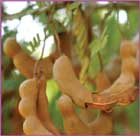
Tamarindus indica is the only species of the genus Tamarindus in the family Fabaceae. The tree can grow up to 20 meters in height, and stays evergreen in regions without a dry season. Tamarind timber consists of hard, dark red heartwood and softer, yellowish sapwood. The leaves consist of 10 to 40 leaflets. The flowers are produced in racemes. The tree produces brown pod-like fruits, which contain pulp and many hard-coated seeds. The seeds can be scarified to enhance germination.
In Malaysia it is called asam in Malay and swee boey in Hokkien. In India its called imlee. In Sinhala the name is siyambala, in Telugu it is called Chintachettu (tree) and Chintapandu (fruit extract) and in Tamil and Malayalam it is puli. The tamarind is the provincial tree of the Phetchabun province of Tha...
more |
|
|
|
| Capsicum |
|
|
|
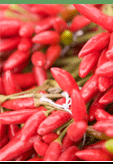
Capsicum is a genus of plants from the nightshade family (Solanaceae). Some of the members of Capsicum are used as spices, vegetables, and medicines.
The fruit of Capsicum plants is commonly called 'chili pepper' or just
pepper in Britain and the US, but is usually called 'capsicum' in
Australian English. Capsicums originated in Central and South America, but are now grown worldwide. We offer capsicum in flakes and powder form.
more |
|
|
|
| Sesame seeds |
|
|
|
Sesamum indicum) is a flowering plant in the genus Sesamum. The precise natural origin of the species is unknown, although its closest
relatives occur in Africa. It is widely naturalised in tropical regions
around the world and is cultivated for its edible seeds.
It is an annual plant growing to 50-100 cm tall, with opposite leaves
4-14 cm long with an entire margin; they are broad lanceolate, to 5 cm
broad, at the base of the plant, narrowing to just 1 cm broad on the
flowering stem. The flowers are white to purple, tubular, 3-5 cm long,
with a four-lobed mouth.
The word sesame is from Latin sesamum, borrowed from Greek ses�mon
"seed or fruit of the sesame plant", borrowed from Semitic (cf. Aramaic
shumshema, Arabic simsim), from Late Babylonian *shawash-shammu, itself
from Assyrian shamash-shammu, from shaman shammi "plant oil".
more |
|
|
|
| White Pepper |
|
|
|
Black pepper (Piper nigrum) is a flowering vine in the family Piperaceae, cultivated for its fruit, which is usually dried and used as a spice and seasoning. The same fruit is also used to produce white pepper and green pepper. Black pepper is native to South India and is extensively cultivated there and elsewhere in tropical regions. The fruit, known as a peppercorn when dried, is a small drupe five millimetres in diameter, dark red when fully mature, containing a single seed.
Dried, ground pepper is one of the most common spices in European cuisine and its descendants, having been known and prized since antiquity for both its flavour and its use as a medicine. The spiciness of black pepper is due to the chemical piperine. Ground black peppercorn, usually referred to simply as "pepper", may be found on nearly every dinner table in some parts of the world, often alongside table salt.
The word pepper is derived from the Sanskrit pippali, via the Latin piper and Old English pipor. The Latin word is also the source of German pfeffe...
more |
|
|
|
| Black pepper |

|
|
(Piper nigrum) is a flowering vine in the family Piperaceae, cultivated for its fruit, which is usually dried and used as a spice and seasoning. The same fruit is also used to produce white pepper and green pepper. Black pepper is native to South India and is extensively cultivated there and elsewhere in tropical regions. The fruit, known as a peppercorn when dried, is a small drupe five millimetres in diameter, dark red when fully mature, containing a single seed.
Dried, ground pepper is one of the most common spices in European cuisine and its descendants, having been known and prized since antiquity for both its flavour and its use as a medicine. The spiciness of black pepper is due to the chemical piperine. Ground black peppercorn, usually referred to simply as "pepper", may be found on nearly every dinner table in some parts of the world, often alongside table salt.
...
more |
|
|
|
|
<< < [1] 2 3 4 5 > >> |
|
|
|
|







)
)