|
|
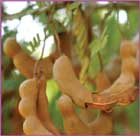
Tamarindus indica is the only species of the genus Tamarindus in the family Fabaceae. The tree can grow up to 20 meters in height, and stays evergreen in regions without a dry season. Tamarind timber consists of hard, dark red heartwood and softer, yellowish sapwood. The leaves consist of 10 to 40 leaflets. The flowers are produced in racemes. The tree produces brown pod-like fruits, which contain pulp and many hard-coated seeds. The seeds can be scarified to enhance germination.
In Malaysia it is called asam in Malay and swee boey in Hokkien. In India its called imlee. In Sinhala the name is siyambala, in Telugu it is called Chintachettu (tree) and Chintapandu (fruit extract) and in Tamil and Malayalam it is puli. The tamarind is the provincial tree of the Phetchabun province of Thailand. The pulp of the fruit is used as a spice both in Asian as well as in Latin American cuisine, and is also an important ingredient to Worcestershire sauce and HP sauce. The pulp of a young fruit is very sour, and hence suitable for main dishes, whereas a ripened fruit is sweeter and can be used in desserts, drinks, or as a snac.
It is a staple in the South Indian diet, where it is used to prepare Sambhar (spicy lentil soup with lots of vegetables), Pulihora rice, and various types of chutneys. Tamarind is available in Indian stores worldwide. It is also sold as a candy in Mexico (see for example, pulparindo), and in various snack forms in Southeast Asia (dried and salted, dried and candied, as a cold drink, popsicle). Tamarind, due to its medicinal value, is used as an Ayurvedic Medicine for gastric and/or digestion problems. Tamarind is a popular food in Mexico and is used in many Mexican candies.
Packing Available:
Out of stock
|

















)


 RSS Feed