|
| Welcome! |
|
Indus Organics provides certified organic products for retail and bulk wholesale. Our current products are fine organic culinary herbs, organic spices and organic seeds. Our retail package products are... ... more
|
|
|
|
 |
Order Products |
|
 |
|
|
|
Other Links |
|
|
|
|
|
News Letter |
|
|
|
|
 |
Latest News |
|
|
|
|
|
|
|
Browse By Product Name : A B C D F G H M N O P R S T W Z
|
| Coriander Powder |
|
|
|
Coriander (Coriandrum sativum), also commonly called cilantro in North America, is an annual herb in the family Apiaceae. Coriander is native to southwestern Asia west to north Africa. It is a soft, hairless, foetid plant growing to 50 cm tall. The leaves are variable in shape, broadly lobed at the base of the plant, and slender and feathery higher on the flowering stems. The flowers are borne in small umbels, white or very pale pink, asymmetrical, with the petals pointing away from the centre of the umbel longer (5-6 mm) than those pointing to the middle of the umbel (only 1-3 mm long). The fruit is a globular dry schizocarp 3-5 mm diameter.
All parts of the plant are edible, but the fresh leaves and the dried seeds are the most commonly used in cooking. Coriander is commonly used in Middle Eastern, Mediterranean, South Asian, Latin American, Chinese, African and Southeast Asian cuisine.
The leaves are variously referred to as coriander leaves, cilantro (in the United States, from the Spanish name for the plant), dhania (in the...
more |
|
|
|
| Ceylon Cinnamon Powder |
|
|
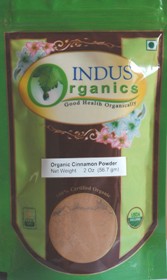
(Cinnamomum verum, synonym C. zeylanicum) is native to Sri Lanka and Southern India. The bark and powder is widely used as a spice. The leaves are ovate-oblong in shape, 7-18 cm long. The flowers, which are arranged in panicles, have a greenish colour and a rather disagreeable odour. The fruit is a purple one-centimetre berry containing a single seed. Cinnamon has flavor due to an aromatic essential oil which it contains to the extent of from 0.5 to 1%. This oil is prepared by roughly pounding the bark, macerating it in sea-water, and then quickly distilling the whole. It is of a golden-yellow colour, with the characteristic odor of cinnamon and a very hot aromatic taste. The pungent taste and scent come from cinnamic aldehyde or cinnamaldehyde and, by the absorption of oxygen as it ages, it darkens in colour and develops resinous compounds. Chemical components of the essential oil include ethyl cinnamate, eugenol, cinnamaldehyde, beta-caryophyllene, linalool and methyl chavicol. We offer Cinnamon in bark, sticks and powder forms. ...
more |
|
|
|
| White Pepper Ground (Malabar ) |
|
|
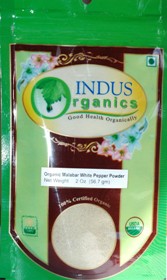
Organic White Pepper powder pack has finest quality Malabar organic pepper that you need to make a tasteful food. These high quality hand picked Peppercorns will give you the taste and aroma that a food lover needs. All our product packs have a re-sealing zipper to protect them from moisture and enhanced shelf life.
more |
|
|
|
| Cumin Seeds |
|
|
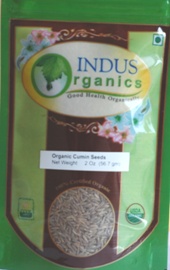
The dried fruit used both as whole cumin seed and or as powdered form is esteemed as a condiment in most spice eating cultures. Cumin is used as a flavoring agent and an essential component inmany ethnical dishes of Indian Curries, Snacks, Mexican foods, and Latin American cuisines. Cumin, a small, annual herbaceous plant of Apiacae family, grows to a height of about 25 cm. The flowers are small with white or pink color in compound umbels form. The seeds come as paired or separate carpel, about 3-6mm long. They have a striped pattern having nine ridges and oil canals. The cumin seeds are small, hairy, boat-shaped, tapering at each extremity, with tiny stalks attached. Cumin seeds are brown-yellow in color. The plants bloom in June and July. The seeds are normally ready four months after planting. The plants are cut when the seeds turn to brown and then thresh and dry to collect the cumin seeds.
more |
|
|
|
| Ginger Ground |
|
|
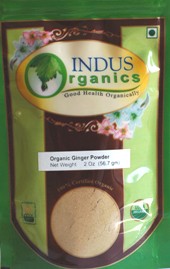
Ginger root is used extensively as a spice in many if not most cuisines of the world. Though called a root, it is actually the rhizome of the monocotyledonous perennial plant Zingiber officinale. Ginger contains upt to 3% of an essential oil which causes the fragrance of the spice. The main constituents are sesquiterpenoids with zingiberene as the main component. Lesser amounts of other sesquiterpenoids (β-sesquiphellandrene, bisabolene and farnesene) and a small monoterpenoid fraction (β-phelladrene, cineol, and citral) have also been identified.
The pungent taste of ginger is due to nonvolatile phenylpropanoids (particularly gingerol and ...
more |
|
|
|
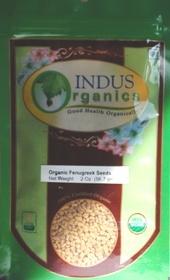
| Fenugreek Seeds |
|
|
Fenugreek, is a crop plant grown as a potherb and for the spice made from its seeds. The fenugreek plant grows wild from the eastern Mediterranean area to China; it is cultivated worldwide. The name fenugreek or foenum-graecum is from Latin for "Greek hay".
Fenugreek is used both as a herb (the leaves) and as a spice (the seed). The yellow, rhombic fenugreek seed is frequently used in the preparation of pickles, curry powders and pastes, and is often encountered in the cuisine of the Indian subcontinent and Thailand. The young leaves and sprouts of fenugreek are eaten as greens and the fresh or dried leaves are used to flavor other dishes. In the Arabian nation of Yemen it is the main condiment and an ingredient added to the national dish called Saltah. The similarity in th...
more |
|
|
|
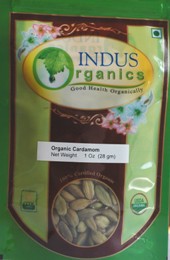
| Cardamom Whole |
|
|
The name cardamom (sometimes written cardamon) is used for species within three genera of the Ginger family (Zingiberaceae), namely Elettaria, Amomum and Aframomum. Cardamom is native to the tropical rainforests of south India, Sri Lanka, Malaysia, and Sumatra. It is now also grown in Nepal, Thailand and Central America. In India, the states of Sikkim and Kerala are the main producers of cardamom; they rank highest both in cultivated area and in production. It is widely used in Korea, Vietnam, and Thailand.
The three main genera of the ginger family that are named as forms of cardamom are distributed as follows:
more |
|
|
|
| Nutmeg Whole |

|
|
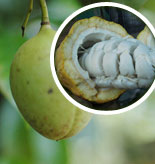
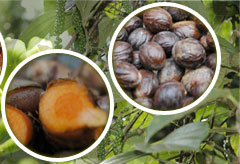
The nutmegs Myristica are a genus of evergreen trees indigenous to tropical southeast Asia and Australasia. They are important for two spices derived from the fruit, nutmeg and mace.
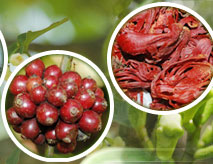
Mace within nutmeg fruit Nutmeg is the actual seed of the tree, roughly egg-shaped and about 20-30 mm long and 15-18 mm wide, while mace is the dried "lacy" reddish covering or arillus of the seed.
Several other commercial products are also produced from the trees, including essential oils, extracted oleoresins, and nutmeg butter.
The most important species commercially is the Common or Fragrant Nutmeg Myristica fragrans, native to the Banda Islands of Indonesia; it is also grown in the Caribbean, especially in Grenada. Other species include Papuan Nutmeg M. argentea from New Guinea, and Bombay Nutmeg M. malabarica from India; both are used as adulterants of M. fragrans products.
more |
|
|
|
| Turmeric Powder |

|
|
Organic Turmeric powder pack has finest quality ingredient that you need to make a tasteful healthy food. Our high quality hand picked turmeric fingers will give you the taste and aroma that a food lover needs for Indian, Thai, Middle Eastern and Mexican cuisine. All product packs have a re-sealing zipper to protect them from moisture and enhanced shelf life.
more |
|
|
|
| Clove Powder |
|
|
Cloves (Syzygium aromaticum, syn. Eugenia aromaticum) are the aromatic dried flower buds of a tree in the family Myrtaceae. It is native to Indonesia and used as a spice in virtually all the world's cuisine. The name derives from French clou, a nail, as the buds vaguely resemble small irregular nails in shape. Cloves are harvested primarily in Indonesia and Madagascar; it is also grown in Zanzibar, India, Sri Lanka, and the "Spice Islands" (Moluccas, Indonesia known as the Bandas Islands).
The clove tree is an evergreen which grows to a height ranging from 10-20 m, having large oval leaves and crimson flowers in numerous groups of terminal clusters. The flower buds are at first of a pale color and gradually become green, after which they develop into a bright red, when they are ready for collecting. Cloves are h...
more |
|
|
|
| Nutmeg powder |
|
|
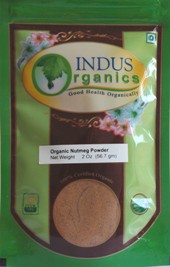
The nutmegs Myristica are a genus of evergreen trees indigenous to tropical southeast Asia and Australasia. They are important for two spices derived from the fruit, nutmeg and mace.
Mace within nutmeg fruit Nutmeg is the actual seed of the tree, roughly egg-shaped and about 20-30 mm long and 15-18 mm wide, while mace is the dried "lacy" reddish covering or arillus of the seed.
Several other commercial products are also produced from the trees, including essential oils, extracted oleoresins, and nutmeg butter.
The most important species commercially is the Common or Fragrant Nutmeg Myristica fragrans, native to the Banda Islands of Indonesia; it is also grown in the Caribbean, especially in Grenada. Other species include Papuan Nutmeg M. argentea from New Guinea, and Bombay Nutmeg M. malabarica from India; both are used as adulterants of M. fragrans products.
more |
|
|
|
| Cardamom Green Pods ( Premium Quality) |
|
|
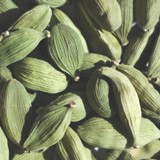
Cardamom is native to the tropical rain forests of south India, Sri Lanka, Malaysia, and Sumatra. In India, the states of Sikkim and Kerala are the main producers of cardamom; they rank highest both in cultivated area and in production.
All the different cardamom species and varieties are used mainly as cooking spices and as medicines. In general, the usual type of cardamom) is used as a spice, a masticatory, and in medicine; it is also sometimes smoked. It is used as an ingredient in traditional systems of medicine in China, India, Korea, and Vietnam.
In India, green cardamom (A. subulatum) is broadly used to treat infections in teeth and gums, to prevent and treat throat troubles, congestion of the lungs and pulmonary tuberculosis, inflammation of eyelids and also digestive disorders. It is also reportedly used as an antidote for both snake and scorpion venom. Species ...
more |
|
|
|
| Ginger Powder |
|
|
|
Organic ginger powder pack has finest quality ingredient that you need to make a tasteful healthy food. Our high quality hand picked ginger roots will give you the taste and aroma that a food lover needs for Indian, Thai, Middle Eastern and Mexican cuisine. All product packs have a re-sealing zipper to protect them from moisture and enhanced shelf life.
more |
|
|
|
| Black Pepper Coarse |
|
|
Organic Black Pepper Coarse pack has finest quality organic pepper that you need to make a tasteful food. This high quality product is made from hand picked Peppercorns that will give you the taste and aroma that a food lover needs. All our product packs have a re-sealing zipper to protect them from moisture and enhanced lifetime.
more |
|
|
|
| Clove Whole (Premium Quality) |
|
|
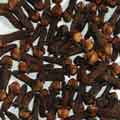
Cloves(Syzygium aromaticum, syn. Eugenia aromaticum) are the aromatic dried flower buds of a tree in the family Myrtaceae. It is native to India & Indonesia and used as a spice in virtually all the world's cuisine. The name derives from French clou, a nail, as the buds vaguely resemble small irregular nails in shape. Cloves are harvested primarily in Indonesia and Madagascar; it is also grown in Zanzibar, India, Sri Lanka, and the "Spice Islands" (Moluccas, Indonesia known as the Bandas Islands).
The clove tree is an evergreen which grows to a height ranging from 10-20 m, having large oval leaves and crimson flowers in numerous groups of terminal clusters. The flower buds are at first of a pale color and gradually become green, after which they develop into a bright red, when they are ready for collecting. Cloves are harvested when 1.5-2 cm long, and consist of a long calyx, terminating in four spreading sepals, and four unop...
more |
|
|
|
| Mace |
|
|
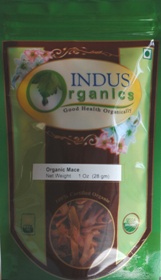
The nutmegs Myristica are a genus of evergreen trees indigenous to tropical southeast Asia and Australasia. The tree provides two spices derived from the fruit, nutmeg and mace. Mace is the dried "lacy" reddish covering or arillus of the seed.
There are few varieties available in the world. The most important species commercially is the Common or Fragrant Nutmeg Myristica fragrans, native to the Banda Islands of Indonesia; it is also grown in the Caribbean, especially in Grenada. Other species include Papuan Nutmeg M. argentea from New Guinea, and Bombay Nutmeg M. malabarica from India.
more |
|
|
|
|
<< < 6 [7] 8 9 10 > >> |
|
|
|
|













)
)
)
)
)
)
)
)
)
)
)
)
)
)

 RSS Feed
)
)