|
|
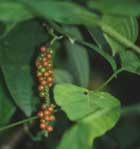
(Piper nigrum) is a flowering vine in the family Piperaceae, cultivated for its fruit, which is usually dried and used as a spice and seasoning. The same fruit is also used to produce white pepper and green pepper. Black pepper is native to South India and is extensively cultivated there and elsewhere in tropical regions. The fruit, known as a peppercorn when dried, is a small drupe five millimetres in diameter, dark red when fully mature, containing a single seed.
Dried, ground pepper is one of the most common spices in European cuisine and its descendants, having been known and prized since antiquity for both its flavour and its use as a medicine. The spiciness of black pepper is due to the chemical piperine. Ground black peppercorn, usually referred to simply as "pepper", may be found on nearly every dinner table in some parts of the world, often alongside table salt.
Black pepper is produced from the still-green unripe berries of the pepper plant. The berries are cooked briefly in hot water, both to clean them and to prepare them for drying. The heat ruptures cell walls in the fruit, speeding the work of browning enzymes during drying. The berries are dried in the sun or by machine for several days, during which the fruit around the seed shrinks and darkens into a thin, wrinkled black layer around the seed. Once dried, the fruits are called black peppercorns.
White pepper consists of the seed only, with the fruit removed. This is usually accomplished by allowing fully ripe berries to soak in water for about a week, during which time the flesh of the fruit softens and decomposes. Rubbing then removes what remains of the fruit, and the naked seed is dried. Alternative processes are used for removing the outer fruit from the seed, including removal of the outer layer from black pepper produced from unripe berries.
Black pepper is the most common, while white pepper is mainly used in dishes like light-coloured sauces or mashed potatoes, where ground black pepper would visibly stand out. There is disagreement regarding which is generally spicier. They do have differing flavours due to the presence of certain compounds in the outer fruit layer of the berry that are not found in the seed.
Pepper gets its spicy heat mostly from the piperine compound, which is found both in the outer fruit and in the seed. Refined piperine, milligram-for-milligram, is about one per cent as hot as the capsaicin in chile peppers. The outer fruit layer, left on black pepper, also contains important odour-contributing terpenes including pinene, sabinene, limonene, caryophyllene, and linalool, which give citrusy, woody, and floral notes. These scents are mostly missing in white pepper, which is stripped of the fruit layer. White pepper can gain some different odours (including musty notes) from its longer fermentation stage.
Pepper loses flavour and aroma through evaporation, so airtight storage helps preserve pepper's original spiciness longer. Pepper can also lose flavour when exposed to light, which can transform piperine into nearly tasteless isochavicine. Once ground, pepper's aromatics can evaporate quickly; most culinary sources recommend grinding whole peppercorns immediately before use for this reason.
Like all eastern spices, pepper was historically both a seasoning and a medicine. Long pepper, being stronger, was often the preferred medication, but both were used. Black peppercorns figure in remedies in Ayurveda, Siddha and Unani medicine in South Asia. The 5th century Syriac Book of Medicines prescribes pepper (or perhaps long pepper) for such illnesses as constipation, diarrhoea, earache, gangrene, heart disease, hernia, hoarseness, indigestion, insect bites, insomnia, joint pain, liver problems, lung disease, oral abscesses, sunburn, tooth decay, and toothaches.
|












)
)